3 Powerful Techniques to Learn Gender Articles in German
 Speak Confident German

Inside: Learn three powerful techniques to save time and frustration when learning German gender articles.
One of the most popular questions I receive at Speak Confident German is:
How Do I Know If a Noun is Masculine, Neuter or Feminine?
It is one of the most difficult questions I wish I could answer with 100% certainty.
The general reaction of native speakers is very often: "You just have to learn it!"
Without a doubt, thousands of hours of listening and corrections go into helping a child learn how to speak a language, making mastery possible.
But are there patterns, strategies or techniques that allow an adult learner to engage with this elusive subject more productively and save time and frustration when learning gender articles?
My answer is yes! But they will only work if you commit to using them consistently. I can show you the techniques, but you must take action and use them every time you learn German nouns.
What Are Gender Articles and Why You Need to Learn Them?
The German singular definite article in the nominative (subject) case has three gender forms:
der for masculine, die for feminine, and das for neuter nouns.
This is a grammatical distinction and has little to do with biological gender.
However, most nouns referring to female beings are indeed feminine, and most referring to male beings are masculine.
der Mann - the man
die Frau - the woman
In English, knowing the gender of each noun is not a precursor to perfecting the language.
We use definite articles in English too, but there is one form: the.
The woman shows the (other) woman the picture.
The man shows the (other) man his car.
In German, however, you need to know the article to decline the noun. If you haven't learned the gender articles well in the beginning, you will still struggle at an advanced level.
Look at the following example :
Die Frau zeigt der Frau das Bild.
The woman shows the (other) woman the picture.
Why does the feminine article "die" suddenly change to "der" (masculine) in one statement?
"der" here is not a masculine article. It is just a different case. (dative, to be precise.)
You need to know it to express the relationship between the two women. Without knowing the noun's grammatical gender, you won't be able to say what you want correctly.
How to Learn Gender Articles
Remember that people and animals – in most cases – are either feminine or masculine.
der Mann/die Frau
the man/ the woman
der Hund/die Hündin
the dog (male)/the dog (female)
However, there is also das Mädchen (the girl), which is a neuter noun.
Why Is "the girl" a Neuter Noun in German?
German has two approaches when it comes to grammatical gender:
1. The logical one, as in der Vater (the father, masculine), die Mutter (the mother, feminine), das Telefon (the phone, neuter);
2. One that seems random at best: die Universität (the university, feminine), das Kind (the child, neuter), der Tisch (the table, masculine).
The gender of a noun is usually indicated with an (m) for masculine, (f) for feminine, and (n) for neuter, or shown by the article (der, die, das) that accompanies it.
The nouns that express entities without gender, such as objects, have only one form. That form can be masculine, feminine, or neuter. For example, der Tisch (the table) can only be masculine and die Tür (the door) can only be feminine.
Other nouns express entities with gender that have only one form, which is used regardless of the entity's actual gender. For example, the German word for the person, die Person, is always feminine even if the person in question is male.
Some noun endings or belonging to a certain category (for example, all weekdays are masculine in German ) will indicate a noun's gender with 100% certainty. However, there are also some exceptions.
Remember this:
Objects without biological gender, such as the table, the book, and the lamp, are not necessarily neuter in German as they are in English.
Many inanimate objects are masculine, and many others are feminine. For example:
das Buch - the book - it
der Tisch - the table - he
die Lampe - the lamp - she
Because the gender of a noun is often the most crucial clue to the function of the noun in a sentence, you must always learn the article with the noun.
Three Techniques to Help You Learn Gender Articles
I won't lie: learning gender articles is one of the most challenging parts of mastering German.
And while there are several approaches to learning gender articles, I want to give you three powerful techniques to save you time and frustration when mastering gender articles in German.
Technique #1
Use mnemonics to learn the grammatical gender of approx. 25% of the German nouns.
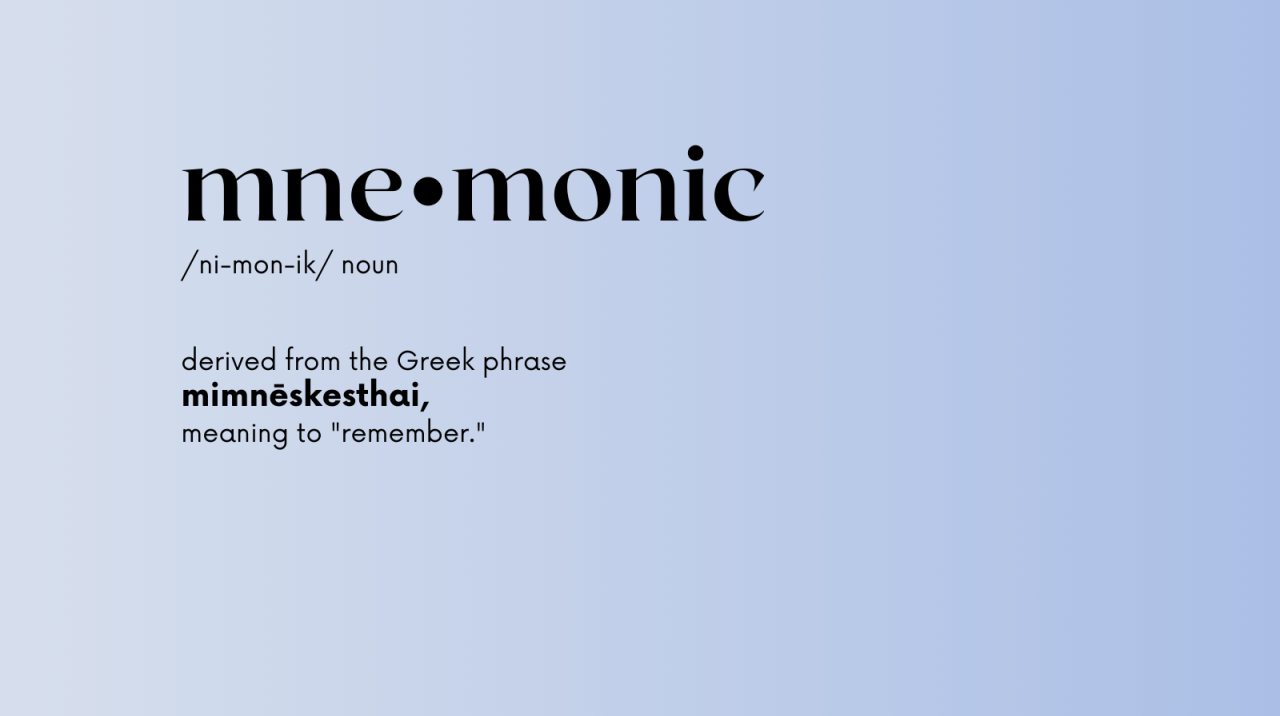
It is a memory technique that helps you remember an idea or phrase with a pattern of letters, numbers, or other tools.
Mnemonics uses rhymes, acronyms, images, songs, outlines, and other tools to help you learn.
You can use mnemonics to master gender articles in German.
Learn the following three words:
die Keitungheiteischaftionietätikure
der Iglingorismuser
das Tumchenmamentumlein
Why?
You probably already know that German is famous for spectacularly long words.
To give you just one example:
der Donaudampfschiffahrtsgesellschaftskapitän
the Danube steamship company captain
However, the three words above aren't actual words. They do not have a meaning. They consist of the endings of approx. 25% of German nouns, and help learn their grammatical gender (feminine, masculine, or neuter).
die keit-ung-heit-ei-schaft-ion-ie-tät-ik**ur**e (feminine)
der ig-ling-or-ismus-**er (masculine)
das tum-chen-ma-ment-um-lein (neuter)
There are very few expectations (I've marked them with ** before the ending), and these endings are reliable.
Examples:
Freundschaft (friendship) is feminine because it ends with -schaft;
Honig (honey) is masculine because it ends with -ig;
Mädchen (girl) is neuter because it ends with -chen.
However, Butter (butter) ends with -er but is a feminine noun: die Butter.
I encourage you to learn these three words. It will take time to remember them, so I suggest you listen to the audio (in the worksheet below) and repeat the words as many times as it takes you to remember the endings.
Technique #2
Learn with symbols/images.
Use the association technique to learn the gender articles of German nouns.
When you memorize the gender of a noun, connect it to a silly image by linking it to a word in your native language.
For example, imagine a monkey (der Affe) with a monocle to learn all masculine nouns; for feminine use the image of a fairy (die Fee), and for neuter nouns, choose another image you can associate with neuter nouns.
You can also go one step further and add some colours (see the technique #3 below):
Examples:
Sonne (the sun): imagine a red fairy lying under the sun – die Sonne
Mond (the moon): imagine a blue monkey dancing under the moon – der Mond
Bett (the bed): imagine a green baby sleeping in the bed – das Bett
Use your imagination to relate the image to the new noun you want to learn. Add funny details to create vivid images in your mind. The funnier/weirder/stranger etc., the picture is, the easier it will be to remember.
Technique #3
Use visual clues.
This technique is beneficial if you are a visual learner.
For example, in my worksheets, I use blue for masculine, red for feminine, and green for neuter.
But you can use "your" colours if it helps you learning gender articles in German.
You can also work with associations by dividing a worksheet into three columns using different colours.
Write new feminine nouns on the left, masculine nouns in the middle, and neuter nouns on the right.
Each time you learn a new noun, remember on which side of the worksheet you wrote it.
As mentioned above, knowing the gender of each noun is the foundation on which accurate German is built.
Using different colours or associations to memorize gender articles is a good learning technique that can help you in your learning journey.
Download the worksheet to learn gender articles in German.
Categories: : Beginner German, Grammar
Top-Ranked German Resources
Sign up for the free Speak Confident German lessons and receive the best resources to learn German every week!